


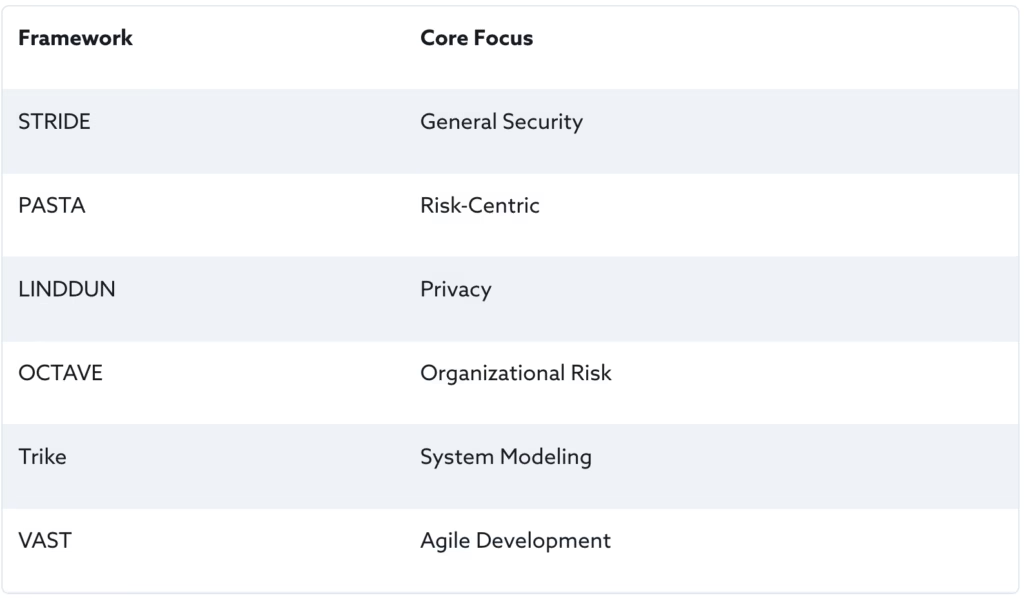
The rapid rise of AI, automation, and interconnected SaaS has reshaped the threat landscape for digital enterprises. Traditional “castle and moat” defenses, or even attack surface checklists like STRIDE, are now woefully inadequate in the face of complex, adaptive risk. Today’s security leaders need structured, dynamic tools to protect every layer: from ML models and data pipelines—through deployment, integration, and third-party business ecosystems—to boardroom-level reporting and compliance. The Cloud Security Alliance’s Agentic AI Threat Modeling Framework: MAESTRO | Cloud Security Alliance framework offers exactly this, and here’s how to translate it into robust, practical assurance for your organization.
Why the MAESTRO Framework?
Legacy frameworks treat security as a siloed technical function. In reality, a single open-source dependency compromise or unexpected ML agent behavior can leap across teams—cascading into API exposure, regulatory fines, business disruption, and loss of customer trust. MAESTRO’s layered model provides the scaffolding to map, monitor, and defend these multi-dimensional threats, supporting the executive priorities and incident learning I’ve seen again and again in modern security programs:
- Adaptability: AI systems, agents, and digital pipelines are always in flux. Security controls and risk maps must be living documents—maestros, not scorekeepers.
- Business Resonance: Controls should protect operations, brand, and regulatory standing—not just address technical hygiene.
- Operational Reality: Multi-cloud, multi-vendor, and rapid release cycles mean every organization is now managing supply chain, ML ops, and agent-driven automation risk—every week, not once a year.

Applying MAESTRO in Practice: Layered, Realistic Steps
1. Map Your Environment
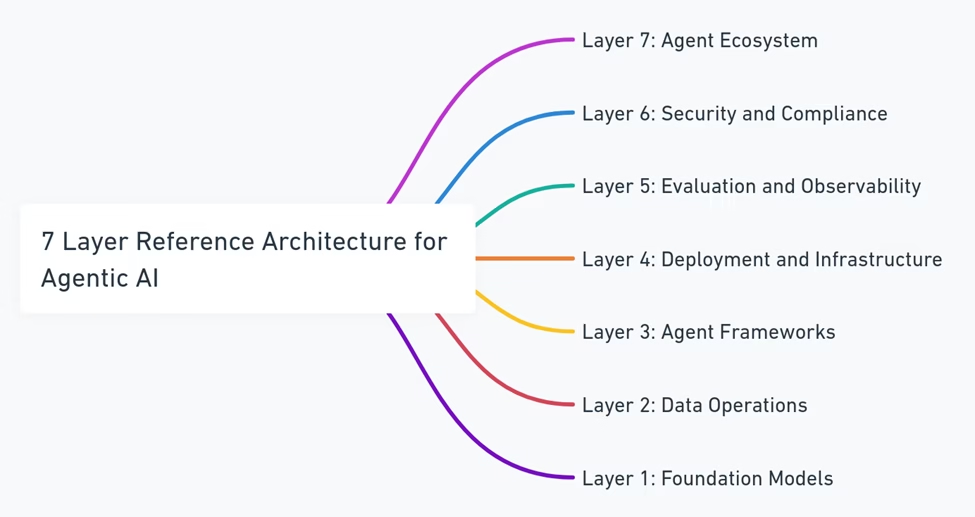
- Start by decomposing your environment: rethink key assets, dependencies, and data flows into the MAESTRO seven-layer model (foundation models, data operations, agent frameworks, deployment, observability, vertical security/compliance, ecosystem/business integration).
2. Identify Layered and Cascading Threats
- Look at each layer using MAESTRO’s threat categories—don’t just enumerate technical bugs. Consider:
- Adversarial manipulation of LLMs
- Data poisoning or leak via pipeline automation
- Supply chain risk in open-source ML frameworks
- Cloud/orchestration misconfigs for agent deployment
- Monitoring blind spots, evasion in telemetry/logs
- Compliance and explainability “gaps” for privacy or sectoral law
- Agent impersonation, marketplace sabotage, or business logic manipulation OWASP Machine Learning Security Top Ten
3. Design Layer- and Cross-Layer Controls
- No single measure is enough—defense must be in depth:
- Foundation/ML Model Layer: Provenance, robust adversarial evaluation, secure access to internal model endpoints. A Practical Guide for Building Robust AI/ML Pipeline Security
- Data Layer: Input validation, user/data segmentation, live anomaly monitoring. Awesome MLSecOps on GitHub
- Framework Layer: SBOMs for all ML packages, vendor risk scoring, and automated dependency checks.
- Deployment: IaC scanning, runtime verification, and rapid privilege rotation if compromise detected.
- Observability: Immutable logging, scenario-driven threat simulation, real-time exceptions for “canary” incidents.
- Security/Compliance: Continuous certification mapping, privacy-by-design, proactive audit drills.
- Ecosystem: Mutual agent/client authentication, registry/reputation scoring, third-party risk validation.
4. Drive Cross-Functional, Scenario-Based Testing
- Enable red/purple team exercises across silos that mimic real cascading failures: e.g., from a compromised library to unauthorized data flows, to compliance exposure and executive incident response.
- Use these incidents not only to test controls, but to refine dashboards for board-level communication.
5. Shift from Static to Adaptive Security
- Update threat models as features, partners, or regulations change—not just annually, but every major deployment.
- Treat security metrics as leading risk indicators, not after-the-fact compliance stats.
6. Communicate Risks and Controls in Business Terms
- Produce a one-page layered dashboard outlining risk by layer, business impact, top controls, and incident readiness—share with all major stakeholders and review quarterly.
Recommendations for Security Leadership
- Position MAESTRO as your “language of layered risk”—using its seven-layer mapping not just for engineering, but for procurement, compliance, board briefings, and regulatory engagement.
- Use layered threat modeling to inform incident response playbooks, vendor management, and third-party procurement.
- Run cross-disciplinary workshops—bring operations, data engineers, legal/privacy, and dev teams together to practice “what if” scenarios and strengthen response muscles.
Summary: From Principled Design to Operational Resilience
Security in the age of AI is about more than technical patching or basic policy. It’s about orchestrating controls, talent, and business process in harmony—layer by layer. The CSA MAESTRO Framework is the score, but the real music is played day to day: in continuous improvement, risk-driven communication, and collective learning from the ever-changing threat surface.
Adopt MAESTRO. Evolve your practices. Make security the mission-critical language of business sustainability and opportunity.
Stay tuned for focused checklists, visual roadmap guides, and case-based workshops designed for real-world security leadership in the digital era!